
 Image 1 of 1
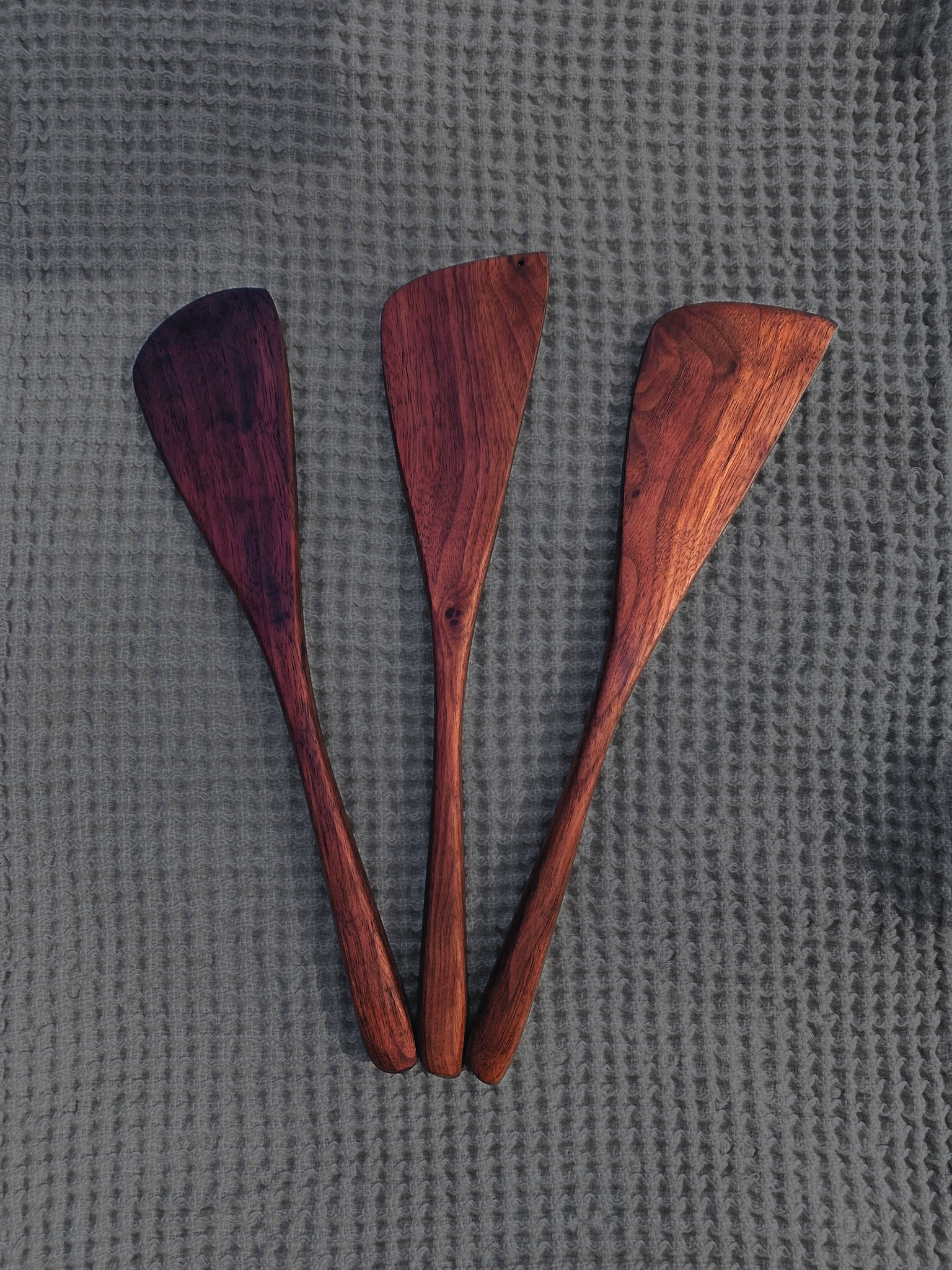
The St. Paul Walnut Spatula
Hand-made from a tree that almost became mulch.
About three years ago, a walnut tree came down in a St. Paul neighborhood. The usual fate for a tree like that is a chipper, a pile of mulch, and a quiet funeral nobody attends. Instead, it came to my mill. I sawed it, stacked it, and let it dry for three years, because good wood doesn't care about your schedule.
Now it's a spatula.
I know. A tree lived for decades, weathered storms and squirrels, and ends up flipping your eggs. But I'd argue it's the most dignified retirement a walnut could ask for. It's far better than a driveway of wood chips, and it's certainly better than a landfill.
The details:
11" overall length, sized for a real hand and a real pan
Solid walnut, salvaged from an urban tree right here in St. Paul
Finished with food-grade mineral oil, nothing fancy, nothing weird
Every one is a little different, because trees don't come off an assembly line and I'm not going to pretend they do
Care: Hand wash with mild soap and warm water, dry it off, and don't leave it soaking in the sink. Every so often, rub on a little food-grade mineral oil to keep it happy. Treat it decently and it'll outlast most of your other kitchen gear, and probably your next two nonstick pans.
Why wood, and why not plastic?
Plastic has crept into the kitchen over the last few decades. Spatulas, spoons, cutting boards, and storage containers have all gone plastic, and we've come to accept it without much thought. But there are good reasons to reconsider.
Plastic utensils get scratched, gouged, and worn down, and they meet high heat on a regular basis. Researchers are still working to understand how much plastic and plastic-related chemicals end up in our food, but it's a fair question to ask, and a lot of folks would rather not find out the hard way. Wood has none of that baggage. It's a single natural material with centuries of kitchen use behind it.
Wood also just works better:
Gentle on cookware. It won't scratch your cast iron, stainless, or enameled pans.
Heat doesn't bother it. The handle stays comfortable, and it won't warp or melt against a hot pan edge.
It lasts. With a little oil now and then, a wood utensil gets better with age instead of worse.
It's renewable and repairable. A scratch on wood sands out. A scratch on plastic is a scratch forever.
It feels right in the hand. That one's not science, but you'll notice it.
Buy a spatula that has a story. This one's got about eighty years of tree and three years of patience in it.
The St. Paul Walnut Spatula
Hand-made from a tree that almost became mulch.
About three years ago, a walnut tree came down in a St. Paul neighborhood. The usual fate for a tree like that is a chipper, a pile of mulch, and a quiet funeral nobody attends. Instead, it came to my mill. I sawed it, stacked it, and let it dry for three years, because good wood doesn't care about your schedule.
Now it's a spatula.
I know. A tree lived for decades, weathered storms and squirrels, and ends up flipping your eggs. But I'd argue it's the most dignified retirement a walnut could ask for. It's far better than a driveway of wood chips, and it's certainly better than a landfill.
The details:
11" overall length, sized for a real hand and a real pan
Solid walnut, salvaged from an urban tree right here in St. Paul
Finished with food-grade mineral oil, nothing fancy, nothing weird
Every one is a little different, because trees don't come off an assembly line and I'm not going to pretend they do
Care: Hand wash with mild soap and warm water, dry it off, and don't leave it soaking in the sink. Every so often, rub on a little food-grade mineral oil to keep it happy. Treat it decently and it'll outlast most of your other kitchen gear, and probably your next two nonstick pans.
Why wood, and why not plastic?
Plastic has crept into the kitchen over the last few decades. Spatulas, spoons, cutting boards, and storage containers have all gone plastic, and we've come to accept it without much thought. But there are good reasons to reconsider.
Plastic utensils get scratched, gouged, and worn down, and they meet high heat on a regular basis. Researchers are still working to understand how much plastic and plastic-related chemicals end up in our food, but it's a fair question to ask, and a lot of folks would rather not find out the hard way. Wood has none of that baggage. It's a single natural material with centuries of kitchen use behind it.
Wood also just works better:
Gentle on cookware. It won't scratch your cast iron, stainless, or enameled pans.
Heat doesn't bother it. The handle stays comfortable, and it won't warp or melt against a hot pan edge.
It lasts. With a little oil now and then, a wood utensil gets better with age instead of worse.
It's renewable and repairable. A scratch on wood sands out. A scratch on plastic is a scratch forever.
It feels right in the hand. That one's not science, but you'll notice it.
Buy a spatula that has a story. This one's got about eighty years of tree and three years of patience in it.